How to Wrap Carton Sleeves around Canned Tuna and Seafood?
Share this post
Tablet of Content
“Canned Seafood Has been for long a Popular Source of Protein”
 Widely sold in grocery stores, specialty food markets, online, and other retail spaces, the canned seafood market is one of the most popular sections and categories of the CPG industry, covering a wide array of seafood including fish, and shellfish, fundamentally thanks to the preservation, convenience of distribution. A significant driving force of the canned seafood market is the increased demand for ready-to-eat food products. In addition to the extended shelf life of canned seafood, innovations in packaging and product development, are also key contributors to market growth.
According to Transparency Market Research, the global canned seafood market valuation was approximately $22.13 billion in 2017 and is expected to rise to $29.99 billion by the end of 2026, with a CAGR growth of 3.2% during the forecast period from 2018 to 2026.
If you were either in the seafood processing and production industry or you were a copacker that provides SEMs with services of outsourced packaging automation services for their canned seafood products, we recommend you go through this article to find out the advantages of ELITER Packaging Machinery‘s secondary packaging automation solutions for canned products.
The Secondary Packaging of Canned Seafood: Carton Box or Carton Sleeve?
 Tin cans either made of steel or aluminum can be used as the primary packaging to preserve seafood. Probably you have already been counting on packaging technologies like the tuna canning equipment by Hermasa Canning Technology to automate your primary packaging with your canned seafood, however, it is still necessary to apply secondary packaging for the purpose of marketing and information display, as well as to prevent the cans from damage during the distribution.
Despite the fact that sometimes canned tuna are packaged as single in carton boxes, due to the fact that tuna cans are usually of rounded shape, rigid packaging like carton boxes may not be an ideal option for canned seafood now that the cans may slide on themselves when they are packed in the cartons. This is also for the reason that canned tunas are usually supposed to be sold in multiple at a time.
On the contrary, carton sleeves provide more advantages for canned seafood over traditional six-faced carton boxes in terms of material saving, convenience to tear off, as well as branding performance, and visual appeal. The carton sleeve for tuna cans is usually designed with cut-outs or rims, which can have the cans wrapped securely and safe from crashing and sliding, especially when they are packed in multiple, to keep the contained fish in good status and shape. Sleeve is more versatile than carton box now that is can be applied to tuna cans either in single pack or in multipack.

Carton Box vs. Carton Sleeve: Which One is Better for Tuna Cans?
Credit: ELITER Packaging Machinery
Carton Sleeve Packaging Machines for Tuna Cans
ELITER Packaging Machinery provides bespoke automation solutions at either low or high speed to wrap tuna cans with carton sleeves. We have following solutions for you option:
-
High Speed Auto Sleeving Machine
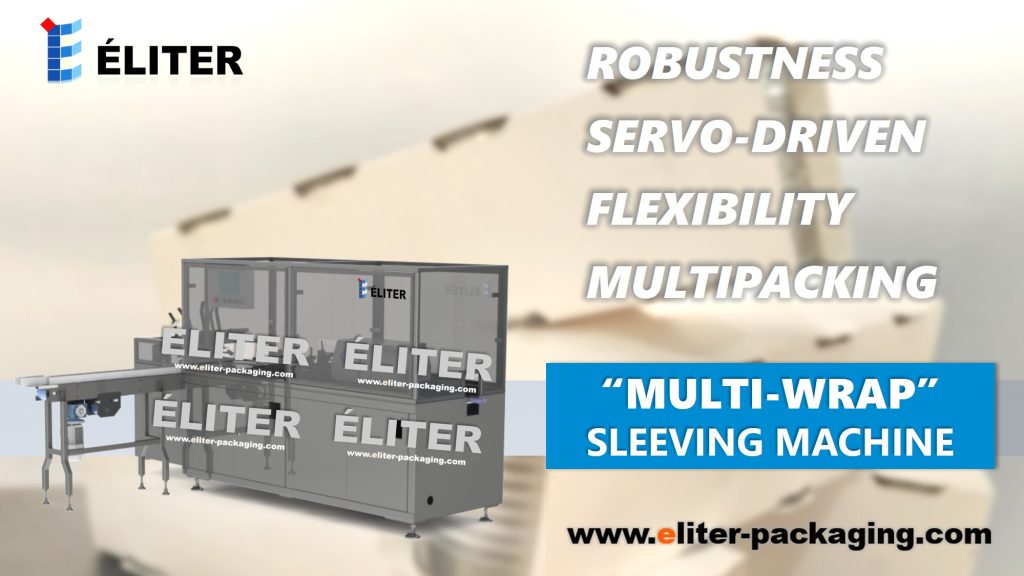
Click to find more information about this auto sleeving machine.
-
Sleeve Wrap-Around Cartoner
 The sleeve wrap-around cartoner is an option for those clients who are with limited budget and only look for a low-speed carton sleeving machine for their tuna cans. Sleeve wrap-around cartoner works with intermittent motion, set-up the carton sleeve with two flaps erected and the horizontal end open from where cans of tuna are loaded, the sealing with glue is done in the superior part of the packaging.

Tuna Can Carton Sleeving Process
Credit: ELITER Packaging Machinery
-
Wrap-Around Sleever

The Wrap-Around Sleever works at continuous motion and provides high-speed solutions to carton sleeving of tuna cans. The cans are aligned through an infeed and grouping system, after which the sleever places carton sleeves on the groupped multipack, the wrap-around process is completed by a series of guides with glue seam applied on the sleeve flap and sealing in the inferior part of the packaging.
You may find our category of sleever and sleeve cartoners by visiting our portfolio page.


