Shrink Sleeving Machine vs. Carton Sleeving Machine: Should I Opt for Plastic Sleeve Label or Paper Sleeve Label?
Share this post
Tablet of Content
Designing product labels is a vital marketing tool. A well-crafted label can make your product stand out from the competition. An effective label not only grabs consumers’ attention but also highlights the unique features of the product. A great design can encourage customers to have a closer look. When creating a label, it’s important to consider the product’s characteristics and the target audience’s preferences, as this can greatly influence sales. However, apart from the design of the label, the way and form on the basis of which the label is produced also affects how significant its marketing and display capability are. With this tip, we are referring to the materials with which the label is made and how it makes difference.
In the drinks and beverage industries, and also the canning industry, saleable commodities are counted as each unit of cans, bottles, jars, cups, tins, etc. As for either supply chain management or for purpose of sales, drinks, beverages, and canned food are often prepared in multipacks. Multipacks offer convenience for consumers by reducing the frequency of shopping trips and providing cost savings through bulk discounts. And for groceries and manufacturers, they save the transport and warehouse cost.
In this article we will do some comparison and contract to the two common options for this purpose, which are shrink sleeve packaging and carton sleeve (paper sleeve label) packaging, then to discuss their advantages and downsides.
What is Shrink Sleeve Packaging & Shrink Sleeving Machine?
Shrink sleeve packaging is a type of labeling and packaging method where a pre-printed plastic film is used to wrap around a product or a group of products. The film is then subjected to heat, causing it to shrink and tightly conform to the contours of the product, creating a sleek and secure package. This method is widely used for a variety of products including beverages, cosmetics, and household goods due to its ability to provide 360-degree coverage with vibrant graphics, enhancing the visual appeal and branding of the product.
A shrink sleeving machine is the equipment used to apply these shrink sleeves onto products. The process generally involves several steps:
- Sleeve Application: The machine cuts the shrink sleeve material to the appropriate length and positions it over the product or product group.
- Heat Shrinking: The sleeved product then passes through a heat tunnel where the application of heat causes the sleeve to shrink and conform tightly to the product’s shape.
- Quality Control: The final step often includes inspection and quality control measures to ensure the sleeve has been applied correctly and securely.
Shrink sleeving machines come in various configurations, depending on the speed, size, and type of products being packaged.


A shrink sleeving machine for multipacks of bottles or cans works by first arranging the containers into the desired pack configuration and then applying a heat-shrinkable sleeve around them. The process begins with feeding the containers onto a conveyor, where they are grouped together. Next, a plastic sleeve is cut and positioned around the group of containers. The multipack then passes through a heat tunnel, where the sleeve shrinks tightly around the containers, securing them together.
Shrink sleeving creates a stable, tamper-evident, and visually appealing package that is easy to handle and transport.
What is Carton Sleeve Packaging & Auto Sleeving Machine?
Carton sleeve packaging involves wrapping a printed cardboard sleeve around a product or a group of products, typically for retail display and protection. This type of packaging is often used for items such as bottles, cans, jars, cans or even ready meals.
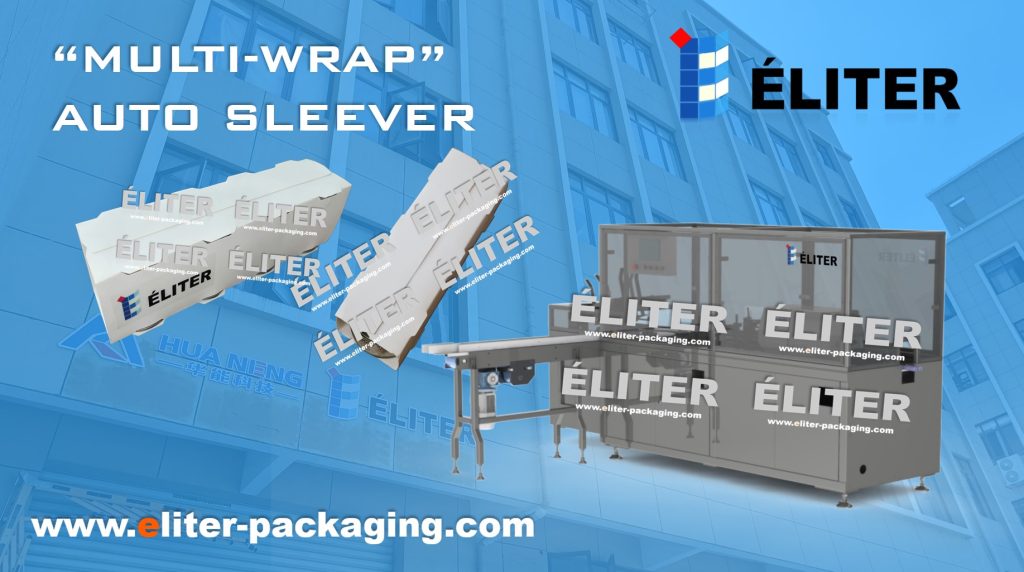
Paper Sleeving Machine by ELITER
The sleeve not only secures the products together but also provides an ample surface area for branding, product information, and promotional messages, enhancing the product’s appeal on store shelves.

Sample of Auto Sleeving Machine
Credit: ELITER Packaging Machinery
An auto sleeving machine automates this process, significantly increasing efficiency and consistency in packaging operations. The machine typically works by feeding the products into the system, applying the pre-cut cardboard sleeves around them, and then sealing or securing the sleeves.
Shrink Sleeving vs. Paper & Carton Sleeving: Pros and Cons
The choice between a shrink sleeving machine and a carton sleeving machine can significantly impact your product’s presentation, protection, and sustainability profile. The decision often boils down to whether to use plastic sleeve labels or paper sleeve labels. Each option has its own set of advantages and considerations that can influence your packaging strategy. Let’s delve into the specifics of each type and explore which might be the best fit for your needs.
Shrink Sleeving Machine and Plastic Sleeve Labels
Shrink sleeving machines utilize heat to shrink a plastic sleeve tightly around individual containers or multipacks. This type of packaging is highly versatile and widely used in industries ranging from beverages to personal care products.
Advantages of Plastic Sleeve Labels
- 360-Degree Branding: Plastic sleeves offer full-body coverage, providing ample space for graphics, text, and branding. This makes them ideal for creating eye-catching designs that stand out on shelves.
- Durability: Plastic sleeves are resistant to moisture, chemicals, and abrasion, ensuring that the product remains protected and the label looks pristine throughout its shelf life.
- Tamper-Evidence: The tight fit of shrink sleeves provides a tamper-evident seal, enhancing product security and consumer confidence.
- Versatility: Shrink sleeves can conform to a variety of container shapes and sizes, offering flexibility in packaging design.
Downsides and Considerations
- Environmental Impact: Plastic sleeves are typically made from materials like PETG or PVC, which can be challenging to recycle and may not align with sustainability goals.
- Cost: The production and application of plastic sleeves can be more costly compared to paper alternatives.
Carton Sleeving Machine and Paper Sleeve Labels
Carton sleeving machines apply a pre-cut cardboard sleeve around products, creating a package that is both protective and brandable. This method is commonly used for food products, beverages, and household items.
Advantages of Paper Sleeve Labels
- Sustainability: Paper sleeves are often made from recyclable or biodegradable materials, making them a more environmentally friendly option. They cater to the growing consumer demand for sustainable packaging.
- Premium Look and Feel: Paper sleeves can convey a premium, natural, or eco-friendly image, enhancing the perceived value of the product.
- Ease of Recycling: Unlike plastic, paper sleeves are widely accepted in recycling programs, simplifying the disposal process for consumers.
- Cost-Effective: Paper sleeves can be more cost-effective to produce and apply, especially for smaller production runs.
Downsides and Considerations
- Durability: Paper sleeves are less resistant to moisture and may not be suitable for all product types, particularly those stored in damp environments. Unless the material used is frozenable and refrigeratable kraft paper, however, packaging cost will rocket with this option of material.
- Design Limitations: While paper sleeves offer good branding opportunities, they may not provide the same level of design flexibility as plastic sleeves in terms of complex shapes and full-coverage graphics.
Making the Decision
Choosing between shrink sleeving with plastic sleeves and carton sleeving with paper sleeves depends on a variety of factors that align with your product’s specific needs and your company’s values.
Start by assessing the type of product you are packaging and its storage requirements; plastic sleeves offer greater durability and moisture resistance, making them ideal for products requiring extra protection. On the other hand, paper sleeves can project an eco-friendly image, making them a strong choice for brands focused on sustainability and appealing to environmentally conscious consumers.
Consider your branding needs and how much space you require for marketing and product information. If full-body graphics and extensive branding are crucial, plastic sleeves provide ample surface area and design flexibility. For products where a natural or premium look is desired, paper sleeves can effectively convey this aesthetic.
Your company’s environmental goals also play a significant role. If reducing your environmental footprint is a priority, paper sleeves may align better with your sustainability objectives, as they are typically more recyclable and biodegradable than plastic alternatives.
Finally, take into account the cost implications, including production, application, and end-of-life disposal. Balancing these factors will help you select the most appropriate packaging solution that supports your brand and meets consumer expectations.


